Getting started in the 2026 US job market means picking a direction with real demand behind it, then applying in a focused way rather than sending the same resume everywhere. The U.S. Bureau of Labor Statistics projects the economy will add jobs from 2024 to 2034, though total employment growth is slower than the prior decade (U.S. Bureau of Labor Statistics, 2025-08-28) — so where you aim matters more than how many applications you send.
This guide walks through the steps from research to follow-up, what to have ready before you apply, and where openings are commonly posted. Requirements, licensing and pay vary by state, employer and industry, so check the specifics for the role and place you're targeting.
Your step-by-step path to a first role
Pick two or three target occupations and read their profiles in the Occupational Outlook Handbook, which covers detailed occupational profiles across a majority of jobs in the US economy and includes 2024-34 projections plus assessments of job outlook, work activities, wages, and education and training requirements (U.S. Bureau of Labor Statistics, 2025-08-28). Write down the entry requirements for each.
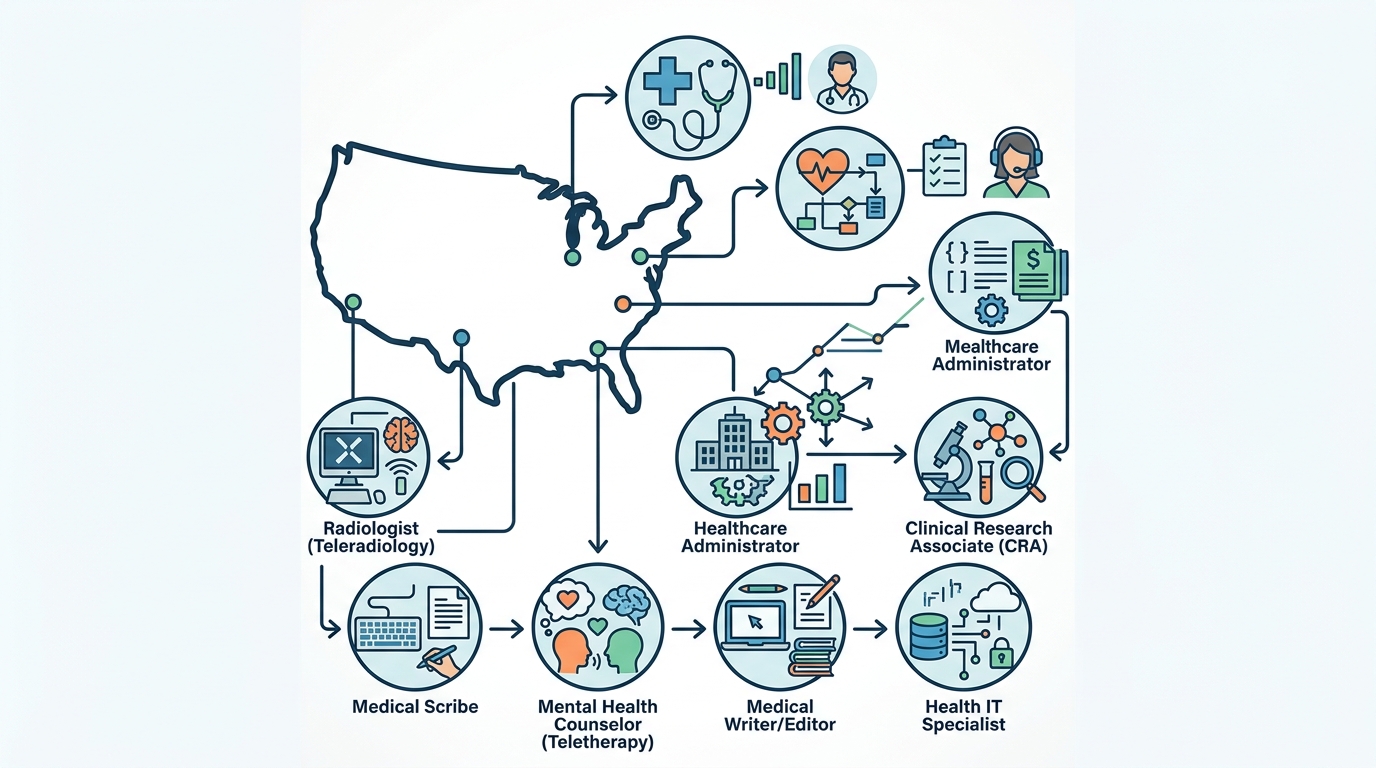
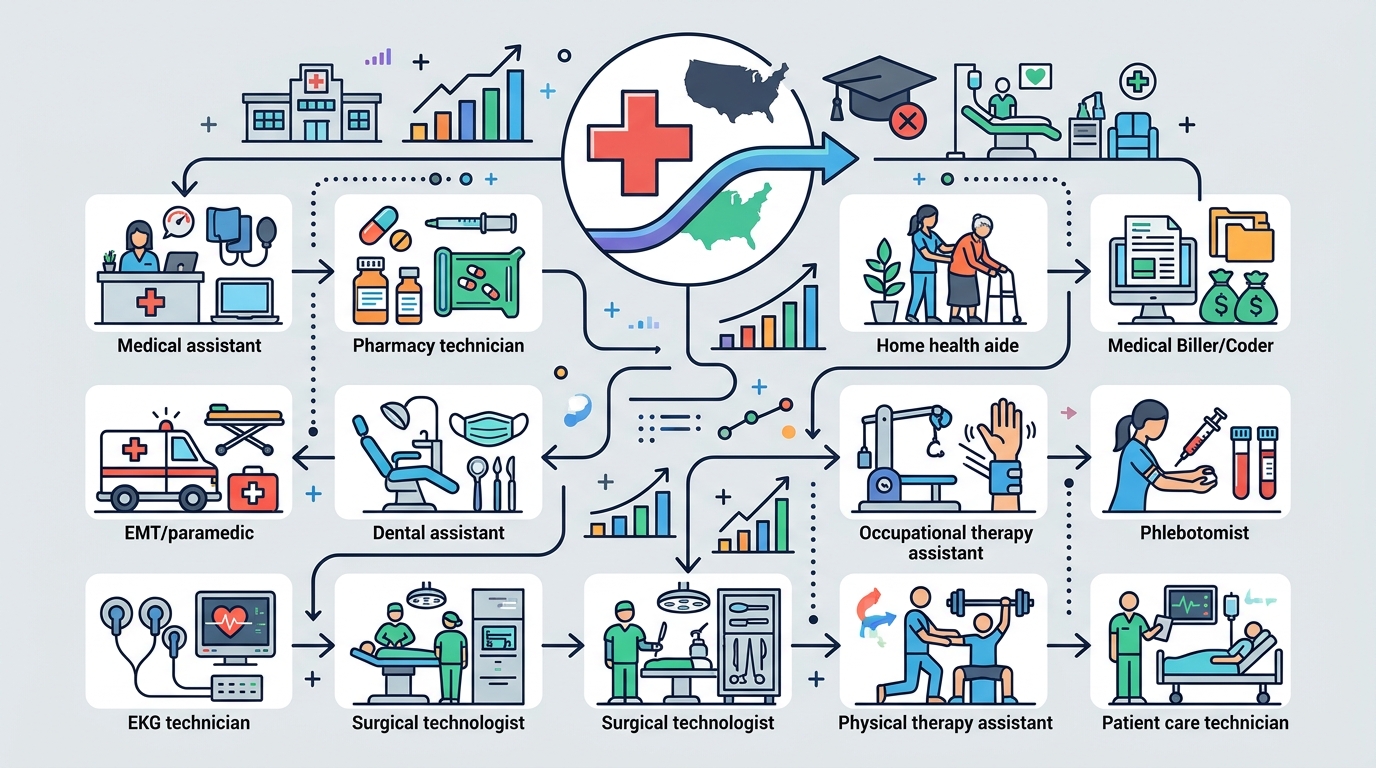
Weigh demand against your situation. Healthcare support and healthcare practitioner occupations are projected to be among the fastest growing occupational groups, and computer and mathematical occupations are projected to grow the second fastest of any group (U.S. Bureau of Labor Statistics, 2025-08-28). Retail trade, by contrast, is projected to lose the most jobs of any sector (U.S. Bureau of Labor Statistics, 2025-08-28) — that doesn't mean no openings, but expect more competition for progression.
Check your state's rules. Licensing, certification and background-check requirements for healthcare, social service and skilled trade roles are set at state level; find your state's licensing board or workforce agency site and confirm what applies before you spend money on training.
Close one gap, not five. Choose the single credential, short course or hands-on experience most often named in the job ads you've saved, and book or start it this month.
Rewrite your resume for one target role. Use the job ad's own words for duties and tools, lead with relevant experience, and keep it to one or two pages in plain formatting that applicant tracking systems can read.
Build a shortlist of 15-20 employers and set up saved searches on the boards and association sites in the last section. Apply to roles you'd actually accept, not everything.
Contact people doing the job. Ask for 15 minutes about what the work is really like and what they'd look for in a new hire. Many openings are filled through referrals before they are widely advertised.
Follow up once, about a week after applying, with a short note to the hiring manager or recruiter restating your fit in two sentences. Keep a simple tracker of dates, contacts and outcomes so you can see which channels are producing interviews.
What to prepare before you apply
A base resume plus a tailored version for each target occupation, saved as PDF and as plain text for forms that strip formatting.
Proof of identity and work eligibility in the form employers ask for at onboarding, kept somewhere you can access quickly. If your situation is complex, speak to a qualified immigration attorney rather than relying on general advice.
Any state licence, certification card or training certificate the role requires, with its expiry date noted and renewal diarised.
Three references with current phone numbers and emails, each asked in advance and told which roles you're applying for.
Evidence of your work: a short portfolio, project write-ups, a code or data sample, before-and-after examples, or a one-page summary of measurable results. Data-related evidence is worth having if you're aiming at professional, scientific and technical services or the information sector, where growth is projected to be driven by AI and data demand (U.S. Bureau of Labor Statistics, 2025-08-28).
Transcripts, diplomas or completion certificates, scanned and named clearly.
A pay range you've researched for your occupation and metro area, using the wage information in official occupational profiles and current listings, so you can answer the expectations question without guessing.
Where to look for openings
Large national job boards, with saved searches by job title, radius and posting date — filter to the last seven days so you're applying while postings are live.
Your state workforce agency or American Job Center, which lists openings and offers free resume help, training referrals and local labour market information.
Employer career pages for the 15-20 organisations on your shortlist. Hospitals, health systems, home care and disability service providers post constantly, and services for the elderly and persons with disabilities is projected to add the most new jobs of any detailed industry (U.S. Bureau of Labor Statistics, 2025-08-28).
Trade and professional associations for your occupation, which often run member job boards, apprenticeship listings and local chapter meetings.
Staffing and temp-to-hire agencies, especially for administrative, warehouse, clinical support and IT contract work. Transportation and warehousing employment growth is projected, driven by parcel shipments and deliveries (U.S. Bureau of Labor Statistics, 2025-08-28). Never pay an agency to place you.
Union halls and registered apprenticeship programmes for construction, utilities and energy trades. Wind turbine service technicians and solar photovoltaic installers are projected to be the fastest growing occupations over 2024-34, though combined they add fewer new jobs than many other occupations (U.S. Bureau of Labor Statistics, 2025-08-28), so openings may be concentrated in particular regions.
Community college career services and local hiring events, including those run by chambers of commerce and public libraries.
Frequently asked questions
How many applications should I send a week?
Fewer, better ones generally beat volume. A realistic target is 5-10 tailored applications a week alongside outreach to people in the field. Track what you send and which channel produced each interview, then shift effort toward whatever is working.
Do I need a degree to start?
It depends on the occupation. Entry requirements vary from a high school diploma plus on-the-job training to a licence or a bachelor's degree. Each profile in the Occupational Outlook Handbook sets out education and training requirements alongside 2024-34 projections (U.S. Bureau of Labor Statistics, 2025-08-28), so check your target role there before enrolling in anything.
How do I answer the salary expectations question?
Give a researched range rather than a single number, and say it's based on the role, your experience and the local market. Check current wage information in official occupational profiles and in live listings for your metro area, since pay varies widely by state and employer. Some states and cities require employers to include a pay range in the posting — check your state's rules.
Which fields look strongest if I'm starting over?
Healthcare and social assistance is projected to have the largest job growth and be the fastest growing industry sector, and computer and mathematical occupations are projected to grow more than three times the average rate for the total economy (U.S. Bureau of Labor Statistics, 2025-08-28). Community and social service occupations are also projected to grow. Match those against your own constraints on training time, schedule and location.
Should I follow up after applying?
Yes, once. About a week after applying, send a short message to the recruiter or hiring manager naming the role and two reasons you fit. If there's no reply after a second week, move on and put your energy into new applications and referrals.
 Aspirational Hub