A practical look at how a second job fits around your first one, which remote roles take beginners, and what the tax and equipment side involves.
A second income job is paid work you take on alongside your main job. The U.S. Bureau of Labor Statistics (2025) defines a multiple jobholder as a worker with monthly employee earnings who works at least one month with earnings from two or more employee jobs — and that is the simplest version of this: a second payroll job, often remote and part-time.
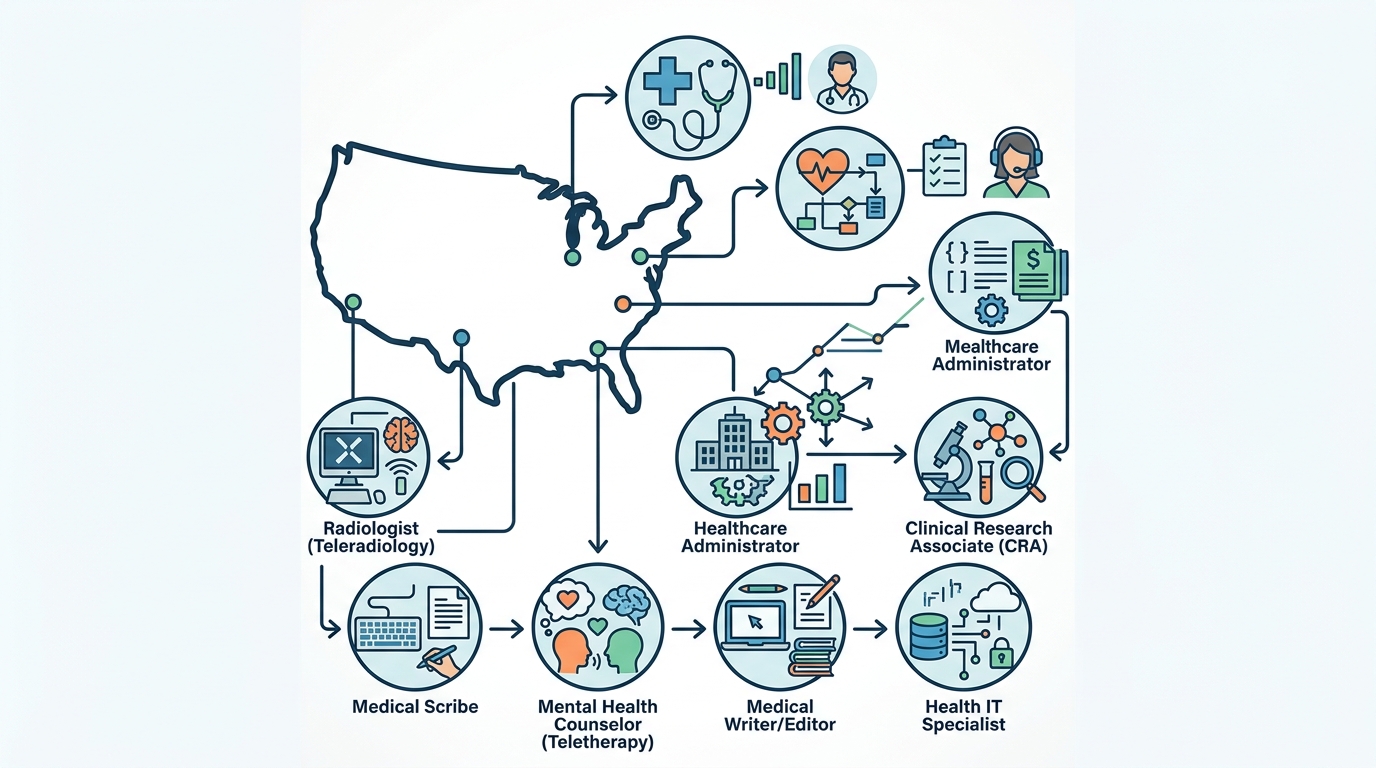
Remote openings exist across many fields, from entry-level customer service through to software development and research (CareerOneStop, undated). The fastest route in is usually a role that hires on reliability and availability rather than on a long credential list, then building from there.
Frequently asked questions
Do I have to tell my main employer about a second job?
It depends on your contract, your employer's handbook and your state. Some employers require written approval, some only restrict work for competitors, and some say nothing at all. Read the handbook first and ask HR in writing if the wording is ambiguous. This is a policy question for your employer, not something to guess at.
How is a second job taxed differently?
A second payroll job withholds tax like your first, but the combined income can change your withholding, so review your Form W-4. Contract work is different: independent contractor earnings are subject to self-employment tax (Internal Revenue Service, undated), and a business paying you more than $600 in a year must complete Form 1099-NEC (ADP, undated). Set money aside from the first payment and check current IRS guidance or a tax professional.
What should I expect to earn?
Pay for second jobs is usually hourly for payroll roles, and per-hour, per-line or per-project for contract work. Rates vary widely by state, employer and shift, and overnight or weekend hours sometimes carry a differential. Check the Bureau of Labor Statistics Occupational Outlook Handbook for the occupation's current median pay and your state labor department for local wage data before you accept a schedule.
Do I need a certificate to work from home?
Not for every role. Entry-level customer service representatives typically need a high school diploma or equivalent (U.S. Bureau of Labor Statistics, 2025). Medical transcriptionists typically need postsecondary education leading to a certificate (U.S. Bureau of Labor Statistics, 2025). Check the specific posting's requirements rather than assuming the field has one standard.
How do I avoid remote job scams?
Legitimate employers do not ask you to pay for your own job, buy equipment through a personal transfer, or cash a check and forward part of it. Some employers do provide equipment and technical support (CareerOneStop, undated); others ask you to use your own computer and internet — both are normal, but neither involves you paying the employer. Verify the company's domain in the recruiter's email address and apply through the official career page where you can.
 Aspirational Hub