Short certificates, a clean screening record and well-timed applications matter more than a diploma for most entry-level hospital roles.
Hospitals fill a large share of their non-clinical and support roles with people who have a high school diploma or GED, a short certificate at most, and the ability to pass a background and health screening. The usual path is to pick one or two target roles, meet the specific entry requirement for that role in your state, then apply directly through hospital career portals and keep applying as new postings appear.
Requirements vary by employer and by state — the same job title can be unregulated in one state and require registration or a certificate in another, so check locally before you spend money on training.
What to prepare before you apply
Have these scanned and saved in one folder so you can complete an application in a single sitting:
- High school diploma, GED certificate, or a transcript showing completion — plus any certificate of completion from a short training program.
- Government-issued photo ID and your Social Security card or other documentation the employer's onboarding paperwork asks for.
- Immunization records, including childhood vaccines, and recent TB test results if you have them. Hospitals request these at offer stage and delays here hold up start dates.
- A current CPR or Basic Life Support card, if your target roles ask for it, with the expiry date visible.
- Three references with current phone numbers and email addresses — supervisors are stronger than coworkers, and a volunteer coordinator counts.
- A one-page resume with continuous dates, your availability (nights, weekends, rotating shifts) stated plainly, and no unexplained gaps.
- A short written answer, three or four sentences, to "why healthcare?" that you can paste into the cover-letter box and adapt per application.
Frequently asked questions
Do I really need a certificate to work in a hospital?
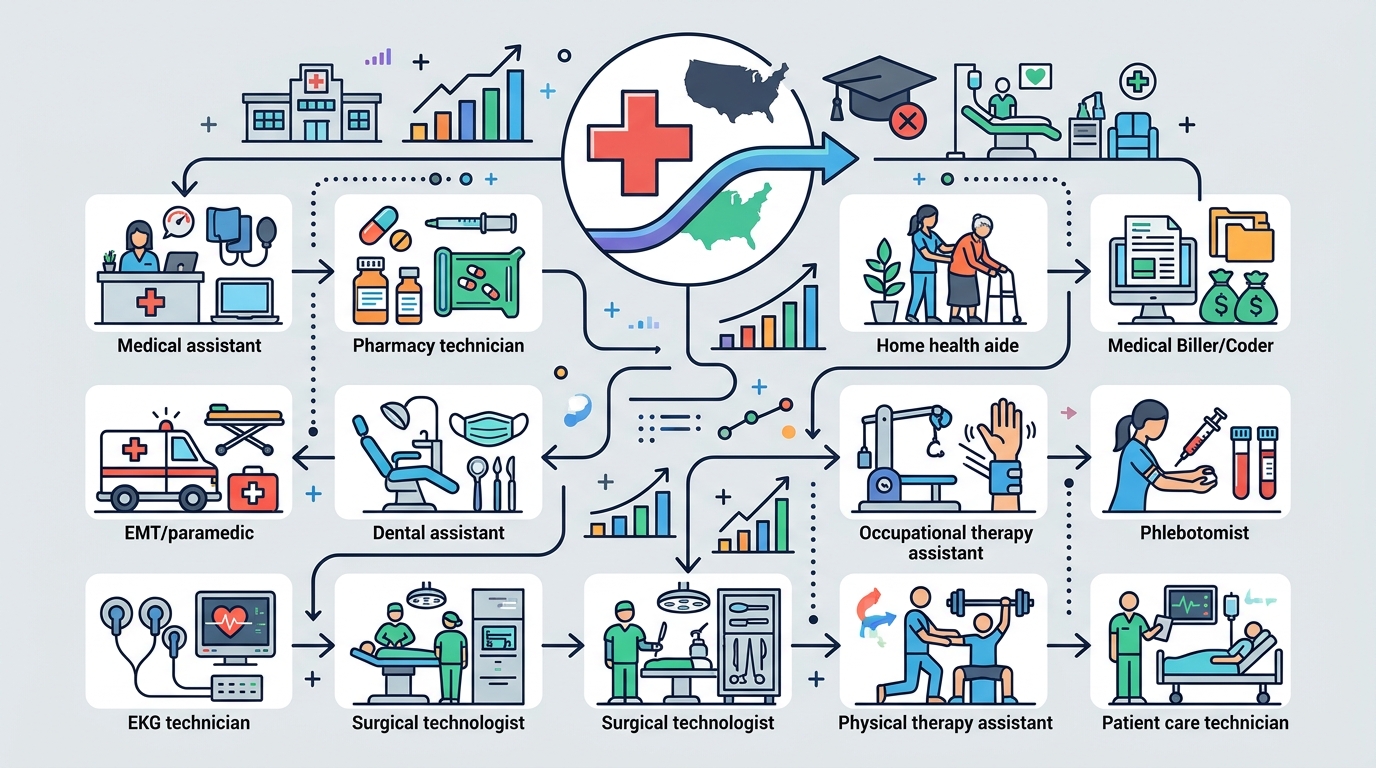
Not for every role. Transport, environmental services, food and nutrition, security, supply chain and many registration or clerical roles typically ask only for a diploma or GED and on-the-job training. Nursing assistant, phlebotomy, pharmacy technician and sterile processing roles usually involve a short course, and whether a credential is legally required depends on your state and on the individual employer's policy.
How long does hospital hiring usually take?
Longer than most retail or warehouse hiring. After an interview, expect a conditional offer followed by a background check, drug screen, and occupational health clearance including immunization review and sometimes a physical or fit test. Build in several weeks and keep applying elsewhere while you wait.
I have no healthcare experience at all. What should I apply for first?
Target the support departments that hire continuously and train on the job, and say clearly on your application that you are available for evenings, nights or weekends. Once you are an employee, you can apply to internal postings, which many systems open to staff before the public, and some employers offer tuition or certification support.
How do I find out what these jobs pay?
Pay varies widely by state, metro area, shift and employer type, and union contracts set rates at some hospitals. Check the current figures in the U.S. Bureau of Labor Statistics Occupational Outlook Handbook and its state and metro wage data, then compare against the pay range listed on local postings, since several states require employers to publish one.
Will a criminal record stop me?
Hospitals run background checks, and rules on what disqualifies an applicant differ by state and by employer policy, with stricter standards where the role involves direct patient contact or controlled substances. Ask the recruiter what their screening covers and whether there is a review process, and if you need to know how a specific record is treated in your state, speak to a qualified attorney or a legal aid service.
 Aspirational Hub